Southern Red Bishop | Uganda Birds
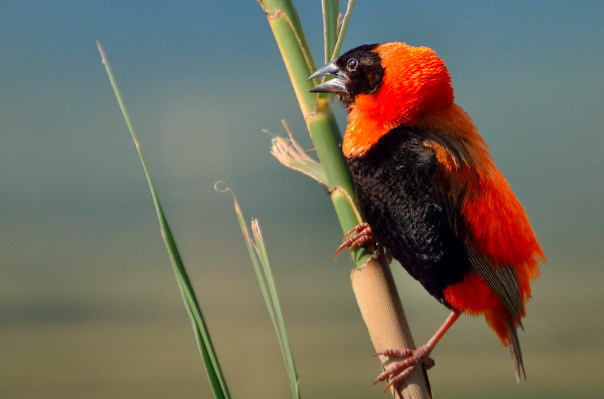
Southern Red bishop | Uganda Birds : also known as the red bishop is a small passerine bird belonging to the bishop. It is widowbird in the family Ploceidae and scientifically also known as “Euplectes orix”. Furthermore, it is a small dumpy sparrow-like weaver and is a common resident in wetlands and grasslands. Over the years, the native Red bishop was classified into two separate birds; Northern red bishop and southern red bishop. In fact, both species have similar appearances since they are sister species. However, they do have some distinct features to distinguish their differences. Both birds have almost the same color of plumage, including black, orange and sometimes red.
Physical description
It is generally a thin, small dumpy sparrow like weaver with a length of 10-11 centimeters with a thick conical bill. The face, throat and forehead are black while the rest of the head is red. In addition, the upper parts are red apart from the brown wings and tail. The upper breast and under tail-coverts are red while the lower breast and belly are black. The female is very similar to the non-breeding male but she is smaller. Additionally, she is less densely streaked on the underparts and her bill, legs and feet are pale pinkish and her eyes are dark brown. Females and juveniles have thick, conical as well as horn-colored bills. On the other hand, males have a darker tinge to their bills and young males molt into their adult plumage at the early age of one year.
Behavior
Generally, this is a gregarious bird, often fond of the company of others, and usually go out in flocks whenever they build nests. As a matter of fact, they do it in groups thus creating nests in colonies not individually. These birds build their nests within reed beds near water to provide coverage from any nearby predators. The species feeds mainly on seeds from numerous plant species and arthropods and forages in small groups with the common starling birds. The species usually feeds twice a day; in the morning and in the late afternoon.
Besides, the male bird is polygamous and may own up to seven or six females or even more in his territory. The southern red bishop also performs bumble-bee-like flight with rapid wing-beats producing buzzy sounds during the breeding period. It also flies airily about over the reed bed, with fluffed out plumage. Pairs and small flocks are always close to water when breeding and mixed species colonies occur in reed beds and swampy grasslands. However, they disperse into neighboring scrubs in the non-breeding season, often in flocks. The female species has various twittering calls and a nasal contact call while the male has a buzzing song.
Reproduction
This bird is a highly polygamous the reason as to why males build a number of nests in colonies.. The male successful mating is determined by the total number of nests built per male during the breeding season. In fact, the nests are characterized by the density of fibers in the nest chambers describing size and transformation. Females basically prefer nests that are more densely woven and have larger entrance roof covers and the nest durability. During the breeding season, the male birds build several nests averaging seven in the colony. This is done in order to attract females and to perform their display-flight to attract females. It is done using their puffed body plumage and this is why they are described as sexually dimorphic.
The female basically lines the interior with plant grass and seed heads, and continues during the incubation. The nest is usually placed in reeds, maize fields, sedges and other aquatic plants standing in water. Besides, the males performs aerial displays over the territory to attract females in his colony during the breeding season. The female generally lays 3 pale blue-green or turquoise eggs and incubation lasts about 12-13 days done by the female only. After hatching, she also feeds the chicks, firstly by regurgitation of seeds. Later, they fledge at the age of 11-15 days after hatching, but they are always able to leave the nest at the age of 10 days. The young male can breed at two years whilst the young female can breed at one year of age.
Feeding and diet
Apparently on the feeding habit, this bird has a very simple food source, mainly including grass seeds. The bird also feeds on various grasses which are carotenoid producing pigments that give them the orange or red plumage. Besides the grass, they also eat small insects and they are considerably good at hunting insects. They can do this on land or whilst flying like beetles, caterpillars, termites, spiders, flies dragonflies, etc. The diet of the bird varies throughout the seasons, depending on what their body needs. In addition the bird also feeds on seeds of wheat, maize and about 24 other plant species.
Where to find them in Uganda
In Uganda, the Pearl of Africa you can find this marvelous bird in Bwindi Impenetrable National Park.


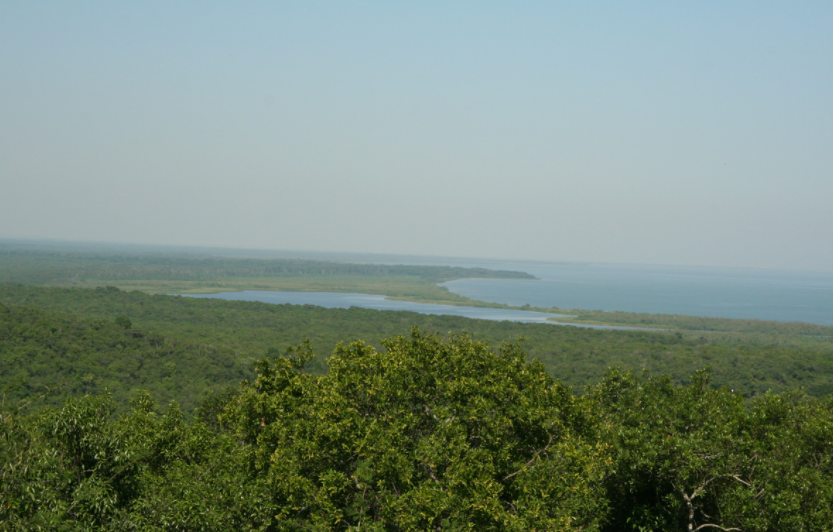
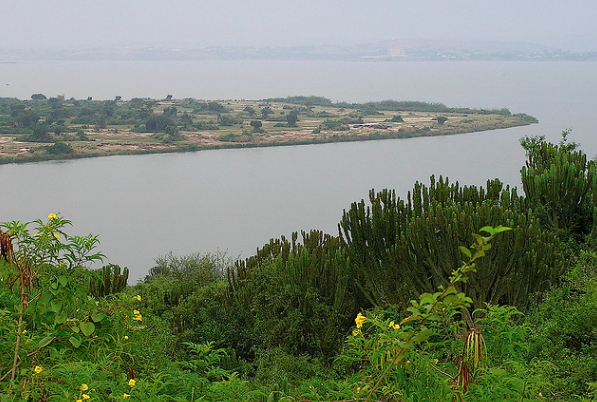
The lake is located in Kasese district, in the western region of Uganda and shared by Uganda about 29% of its surface area and the Democratic Republic of Congo 71% of the surface area. The Lake generally covers a surface area of about 2325 square kilometers lying at an elevation of 920 meters and it’s not so deep. The main inflows of the lake include; River Ntungwe, River Ishasha, River Rutshuru, River Nyamugasani, River Rwindi and River Lubilia.
The main inlet to Lake Edward is river Semliki and
Like Lake George, Lake Edward is designated as a Ramsar site due to the importance of its wetland habitat. The Lake is inhabited by many fishing species. These include; the Nile tilapia, Oreo chromil, Leocosticus, Haplochromine, Haplochromis, Blue-spotted tilapia, etc. Fishing is an important activity and it provides an income for the local residents. Here, the Vitshumbi is the largest of the local fishing markets. 
Besides, Lake George has got some islands recorded such as Kankuranga, Irangara as well as Akika. Its inflows include; Dura, Mpanga, Nsonge, Rumi, Katonga and Mubuku from Rwenzori. The lake possesses its major catchment area within the Rwenzori ranges and the northeastern agricultural area.
Later, he renamed it “George” on his return in 1888 after realizing they were two independent lakes.
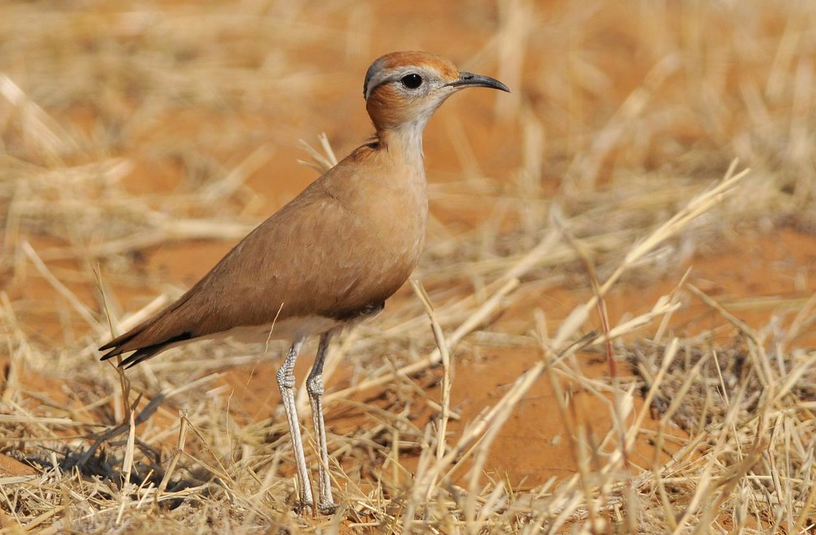
The Burchell’s courser bill is generally long, arched down and of a dark color like eyes. It possesses a blue-grey hind crown, a horizontal black band demarcating a white down belly and an overall pale rufous color. The face feathers are white supercilia above black eye lines, all concluding at the back of the neck forming a double V. Additionally, its secondary feathers are mostly white with a black underwing and brown to grey coverts. Females and males look analogous whilst juveniles miss the rufous color, the facial stripes and the grey hind crown of the adults. This bird with its camouflage appearance blending within the landscape making it challenging to spot.
Referring to their names, coursers are great runners as their name suggests hence they need open grounds. Most birds prefer running to flying in case they are disturbed however they fly extremely well. Their plumage is normally highly cryptic thus providing excellent camouflage which they rely on for concealment. Coursers are typically true migratory birds although some may have more or less seasonal movements. Besides, they tend to be rather shy as a rule, seldom allowing a close approach, then running rapidly away before taking flight if pressed. They are active both day and night, becoming partly nocturnal during hot weathers especially on moon lit nights.
The birds are monogamous and occur in small flocks but usually are solitary nesters. They nest on the ground without any nest, or even in a shallow scrape in the soil. It lays a clutch of two eggs directly on the ground sometimes surrounded by stools of antelopes, small rocks or dried up organic matter. The eggs consists of an oval shape with black looks from a far distance, but they are actually of a buff color with many dark markings. Both parents participate in the incubation period however, uncertainties are expected during the hatching and fledging times. Even though chicks are considered precocial, they lack the heat-loss mechanisms possessed by the adults to survive the hot climate and thus shade to avoid overheating. 
In that very year new routes to Cairo, Cologne and Dubai were launched followed by Kilimanjaro, Nairobi and Dar es Salaam in the subsequent years. By March 1990, the fleet contained one Boeing 707-320C, two Fokker F27-600S, one Lockheed L-100-30, one Twin Otter and one B-N Trislander. A Boeing 737 was leased from Air Zimbabwe in 1994 to serve Bujumbura and Kigali, as well as destinations in South Africa.
In the late 1990s, the Government of Uganda planned to privatize the debt- ridden Airlines in order to search for an investor. Actually, it was done to keep the company at balance since it was in a decline cash position. Interestingly, at the beginning, numerous firms held an interest in taking over the Uganda Airlines.
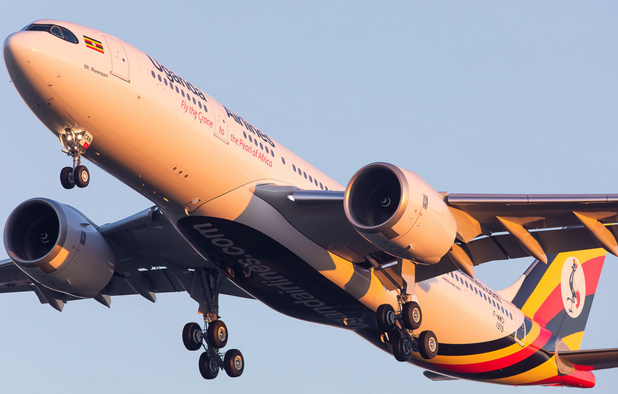
In April 2019, the delivery of the Bombardier CRJ900 was confirmed on 23rd April 2019 and that of the Airbus A330-800 as the first half of 2021. Furthermore, on 2nd August 2019, the airline declared the launch date on 28th August of the same year. Flights included; Dar es Salaam, Juba, Mogadishu, Nairobi, Kilimanjaro, Mombasa and Bujumbura. On 28th August 2019, the Uganda Airlines had its first commercial flight from Entebbe to Jomo Kenyatta International Airport (JKIA) with eight passengers on board.
In February 2019, the first out of the four CRJ900 aircrafts that the Uganda Airlines had ordered, took the first test flight with the livery of the new Airline. On 5 October 2019, the third and fourth CRJ900s, 5X-KDP and 5X-KNP left Montreal then to Canada and landed Uganda on 7 October 2019. 
With regards to adventure in
As a result, he fell down and water in the gourd poured leading to his abrupt death. It is therefore believed that his blood and water mixed and then begun boiling and coming out of the rock which was later named Kanangorok. In conclusion, the local legend has it that the hot springs were named after Longorok. Besides, there are breathtaking views of panoramic streams, hills and valleys and serene green vegetation as you approach the springs. In addition, the hot springs also attract tourists, drawing many to experience the phenomenon of this hot spring
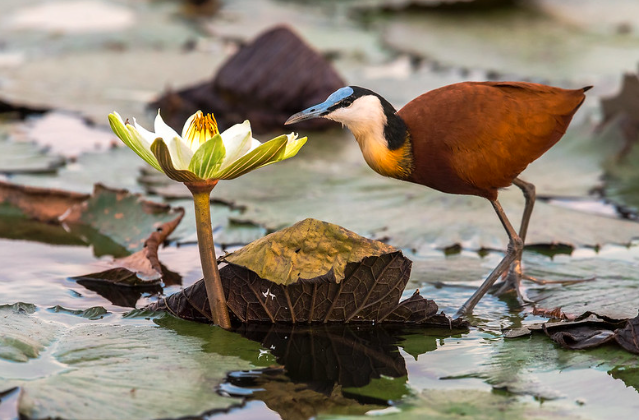
Both adults and juveniles have conspicuous yellow flight feathers that are visible when they raise their wings. The bird’s primary and secondary yellowish-green feathers are visible plus the yellow bony spurs on the leading edge of the wings, used to defend itself and it’s young one. The greenish color of the wing feathers is produced by a pigment called zooprasinin, a copper containing organic compound something rare in birds. The female jacanas are twice as big as the male meaning that males are found to be significantly smaller than females.
They also forage by walking on top of wetland vegetation, using its incredibly long toes to distribute its weight and stay on top of wetland.
When the female breeds, the male builds platforms that are for solicitation displays, copulation and used as nests as well. In fact, the male may create several nests at different sites and the female may choose one or find a site of her own in the territory. The female or the male may solicit to each other and this behavior leads to copulation. When the female assumes a pre-copulatory position, the male may fly up 10 meters or more before flying back down. It lands on her back or landing alongside and hopping on her back.
Males are intolerant of intruders in their territory and make calls to the female for help for predator defense. Females respond to each every call the male makes and invests much interest in the safety of the chicks, despite having little interaction with them. The females will then provide the males with a new clutch when the chicks are 12-16 weeks old. Because females may have several mates, some or all of the young that he raises may not be his.
In feeding, these birds compete with birds of a similar diet like the sora. They basically feed on whatever insects they can glean off of aquatic plants and surfaces. Jacanas turn over floating plants using their bills and feet while searching for insects hiding on the under-surface. These birds also nourish on flowers that are opened by purple gallinules. In conclusion, northern jacanas feed on insects, snails, worms, small crabs, mollusks, seeds and ovules of water lilies. 
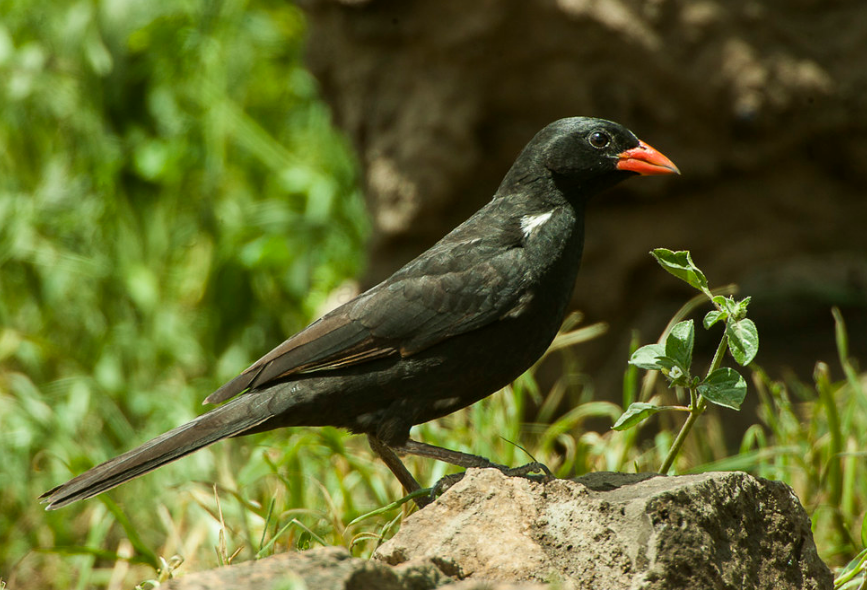
The males have overall black plumage with a red vigorous vermilion bill, brown eyes. They have also got reddish brown feet, white wing tips and front wing edges. The females and the juveniles are pale brown streaky underneath, have paler bills and without white flecks on the wings. Her chin and throat feathers include broad white colored hems. During flight, the bird displays patches of striking white. These birds forage on the ground in small to large groups, often in association with starlings and other birds in search for food.
The males build main structures and start lining chambers whilst the female adds further lining before laying. In case humans leave particular areas, the red-billed buffalo weaver immigrate and occupy in the same area. Bateleur eagles and white-backed vultures tend to construct their nests over or above the red-billed buffalo weaver nests. This is helpful in camouflaging or keeping away their nests from Predators. However, their nests can easily be recognized by their improper and messy construction. 
In fact, these traditions have since then been passed onto the generations up-to-date. The early tales prove that once residents had sex while here, this angered the ‘spirit’ which in turn acted brutally. As a result, the lake turned wild, there were storms which washed houses and trees down. Furthermore, it is said that ‘spirit’ Musambwa took possession of the woman who was involved in the sexual act. She started speaking in unusual way and went on and pointed out the man she was involved with. Afterwards, both were chased away from the island following the orders from the meeting of the elders.
The island is a great place worth an adventure in
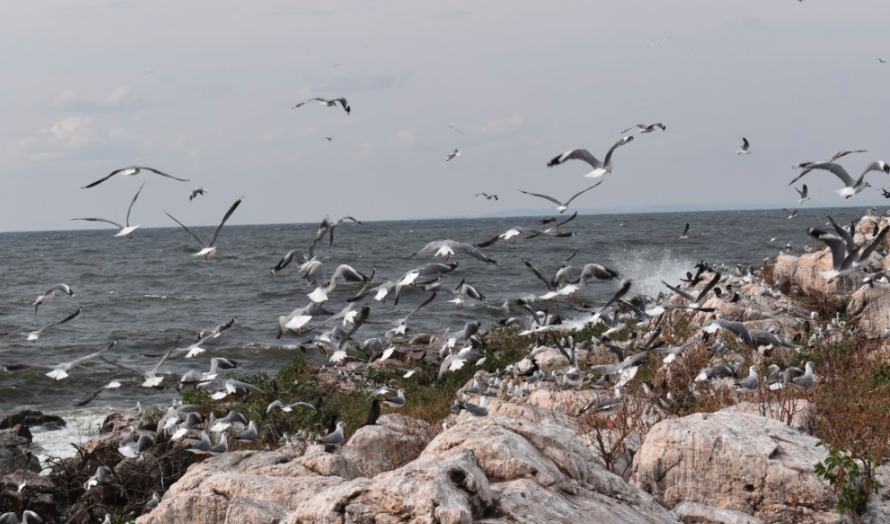
Bird species here include; Pied kingfisher, Black crake, Grey headed gull, Long tailed cormorants. Pink-backed pelicans, Common moorhen, Greater cormorants, Water thick-knee, Little egrets. African fish eagle, Malachite kingfisher, Common sandpiper, Lesser flamingos, Green-backed heron, Sacred ibis. Hamerkop, Lesser black-backed gull, Spur winged plover, Grey heron, Yellow billed duck, African fish eagle, Squacco heron, etc.
Kigarama on the other hand took caution and climbed up a hill leaving his brother Mburo behind. Later, the dream can true and the area was plagued by floods that swept Mburo and all his property. Kigarama in honor of his brother then named the Lake Mburo that was formed due to the floods. Owing to the wildlife that adorns the lake’s surrounding it was first gazetted in 1933 and later established as a
These are mostly enjoyed at night since this is when most of animals are looking for a cozy spot to retire for the night. An experienced arm ranger of course will go on along with you during these drives for guidance and protection. Enjoy the park on wheels as you get a glimpse of the different mammal species in the park. Some of these include; the warthogs, hyenas, buffaloes, bushbucks, impalas, elands, zebras, oribis, Topis, etc.